1999 PCED On Board Diagnostics II |
SECTION 5: Pinpoint Tests |
KB1 DTC P1233 OR P1234: IS DTC P1233 OR P1234 PRESENT IN KEY ON ENGINE OFF
SELF TEST
Is DTC P1233 or P1234 present in Key On Engine Off Self-Test?
|
Yes
|
No
|
|
A hard fault is present. GO to KB2
.
|
The PCM is now receiving a signal from the FPDM. One possible cause of
the DTC P1233 or P1234 is that the IFS switch was tripped, then reset.
If engine is now a no start:
Disregard the DTC P1233 or P1234 at this time. RETURN to Section 3
and
CONTINUE as directed. After servicing the no start, to diagnose intermittent
causes of the DTC P1233 or P1234, RETURN to KB25
.
If engine will start:
GO to KB25
to diagnose intermittent condition.
|
KB2 DOES THE ENGINE START?
Does the engine start?
|
Yes
|
No
|
|
GO to KB15
(to check the FPM circuit).
|
VERIFY IFS switch is set (button depressed). If OK, GO to KB3
.
|
KB3 CHECK POWER AND GROUND CIRCUITS TO FPDM
- Disconnect FPDM.
- Key on, engine off.
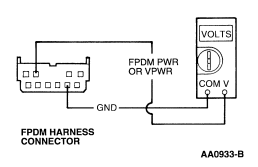
- Measure voltage between the FPDM PWR pin (VPWR for Continental) and
ground pin at the FPDM harness connector.
Is voltage greater than 10.5 volts?
|
Yes
|
No
|
|
Key off. REPLACE FPDM.
|
GO to KB4
.
|
KB4 CHECK POWER TO FPDM
- Key on, engine off.
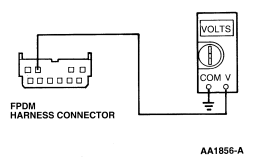
- Measure voltage between the FPDM PWR pin (VPWR for Continental) at the
FPDM harness connector and chassis ground.
Is voltage greater than 10.5 volts?
|
Yes
|
No
|
|
REPAIR open ground circuit to FPDM.
|
KEY OFF. No power to FPDM.
For Escort/Tracer, Mustang:
GO to KB5
.
For Contour/Mystique/Cougar:
GO to KB8
.
For Continental:
GO to KB14
.
|
KB5 CHECK B+ VOLTAGE TO CCRM PIN 11 (FPDM POWER SUPPLY RELAY)
- Disconnect CCRM.
- Measure B+ circuit voltage at Pin 11 of the CCRM harness connector.
Is voltage greater than 10.5 volts?
|
Yes
|
No
|
For Mustang:
GO to KB6
.
For Escort/Tracer:
GO to KB7
.
|
VERIFY integrity of related fuse. If OK, REPAIR open B+ circuit. If
fuse is damaged, CHECK B+ and FPDM PWR circuits for short to ground before
replacing.
|
KB6 CHECK GROUND CIRCUIT TO CCRM PIN 18
- Measure resistance of ground circuit between CCRM harness connector Pin
18 and chassis ground.
Is resistance less than 5.0 ohms?
|
Yes
|
No
|
|
GO to KB7
.
|
SERVICE open ground circuit.
|
KB7 CHECK FOR OPEN FPDM PWR CIRCUIT
- Measure resistance of FPDM PWR circuit between CCRM harness connector
(pin 5) and FPDM harness connector.
Is resistance less than 5.0 ohms?
|
Yes
|
No
|
|
REPLACE CCRM.
|
The FPDM PWR circuit is open. GO to KB13
to
help isolate fault.
|
KB8 CHECK B+ VOLTAGE TO FPDM POWER SUPPLY RELAY
- Disconnect FPDM power supply relay.
- Measure B+ circuit voltage at the FPDM power supply relay harness
connector.
Is voltage greater than 10.5 volts?
|
Yes
|
No
|
|
GO to KB9
.
|
VERIFY integrity of related fuse. If OK, REPAIR open B+ circuit. If
fuse is damaged, CHECK B+ and FPDM PWR circuits for short to ground before
replacing.
|
KB9 CHECK FOR GROUND TO FPDM POWER SUPPLY RELAY
- Disconnect scan tool from DLC.
- Measure resistance of ground circuit between FPDM power supply relay
harness connector and battery negative post.
Is resistance less than 5.0 ohms?
|
Yes
|
No
|
|
GO to KB10
.
|
REPAIR open circuit.
|
KB10 CHECK FOR OPEN FPDM PWR CIRCUIT
- Measure resistance of FPDM PWR circuit between FPDM power supply relay
harness connector and FPDM harness connector.
Is resistance less than 5.0 ohms?
|
Yes
|
No
|
|
RECONNECT FPDM. GO to KB11
.
|
The FPDM PWR circuit is open. GO to KB13
to
help isolate fault.
|
KB11 CHECK VPWR CIRCUIT VOLTAGE TO FPDM POWER SUPPLY RELAY
- Key on, engine off.
- Measure VPWR circuit voltage at the FPDM power supply relay harness
connector.
Is voltage greater than 10.5 volts?
|
Yes
|
No
|
|
REPLACE FPDM power supply relay.
|
REPAIR open VPWR circuit.
|
KB13 ISOLATE OPEN IN FPDM PWR CIRCUIT
- Disconnect IFS switch.
- Measure resistance of FPDM PWR circuit between IFS switch harness
connector and FPDM power supply relay harness connector.
- Measure resistance of FPDM PWR circuit between FPDM harness connector
and IFS switch harness connector.
Are both resistances less than 5.0 ohms?
|
Yes
|
No
|
|
VERIFY that the IFS switch is set (button depressed). If OK, REPLACE
IFS switch.
|
REPAIR open in appropriate area of FPDM PWR circuit.
|
KB14 ISOLATE OPEN IN VPWR CIRCUIT TO FPDM
- Disconnect Electronic Engine Control (EC) Power Relay.
- Disconnect IFS switch.
- Measure resistance of VPWR circuit between IFS switch harness connector
and electronic EC power relay harness connector.
- Measure resistance of VPWR circuit between IFS switch harness connector
and FPDM harness connector.
Are both resistances less than 5.0 ohms?
|
Yes
|
No
|
|
VERIFY that the IFS switch is set (button depressed). If OK, REPLACE
IFS switch.
|
REPAIR open in the appropriate area of the VPWR circuit to the FPDM.
|
KB15 CHECK FOR OPEN FPM CIRCUIT
- Disconnect FPDM.
- Disconnect PCM.
- Measure resistance of FPM circuit between PCM harness connector Pin 40
and the FPDM harness connector.
Is resistance less than 5.0 ohms?
|
Yes
|
No
|
|
GO to KB16
.
|
REPAIR open circuit.
|
KB16 CHECK FPM CIRCUIT FOR SHORT TO POWER IN HARNESS
- Key on, engine off.
- Measure voltage between PCM harness connector Pin 40 and ground.
Is voltage less than 1.0 volt?
|
Yes
|
No
|
|
KEY OFF. GO to KB17
.
|
REPAIR short circuit.
|
KB17 CHECK FPM CIRCUIT FOR SHORT TO GROUND IN HARNESS
- Disconnect scan tool from DLC.
- Measure resistance between PCM harness connector Pin 40 and ground.
Is resistance greater than 10,000 ohms?
|
Yes
|
No
|
|
GO to KB18
.
|
REPAIR short circuit.
|
KB18 CHECK FOR FPM OUTPUT FROM FPDM
- Reconnect FPDM.
- Key on, engine off.
- Measure dc voltage between PCM harness connector Pins 40 and 51.
Is voltage between 0.02 and 1.0 volt dc? (It is OK for the voltage to
cycle below this range and then return to within range.)
|
Yes
|
No
|
|
REPLACE PCM (refer to Section 2
, Flash EEPROM).
|
REPLACE FPDM.
|
KB25 CHECK CIRCUITS THAT MAY CAUSE AN INTERMITTENT LOSS OF POWER SUPPLY TO
THE FPDM. ALSO CHECK FOR INTERMITTENT OPENS OR SHORTS ON THE FPM CIRCUIT.
- Key on, engine off.
- Access FP M PID on scan tool.
- Observe FP M PID for an indication of a fault while completing the
following (If the FP M PID goes below 20%, there is a possible open in the
power supply to the FPDM, or an open or short to ground on the FPM circuit. If
the FP M PID goes above 80%, there is a possible open or short to power on the
FPM circuit.):
- Shake, wiggle, bend the following circuits:
- FPDM ground.
- Power supply circuit (VPWR or FPDM PWR) to FPDM.
- For Escort/Tracer and Mustang, the B+ circuit to CCRM pin 11. For
Mustang, also the ground circuit to CCRM Pin 18.
- For Contour/Mystique/Cougar, the B+ and ground circuits to FPDM power
supply relay.
- FPM circuit between the FPDM and the PCM.
- Lightly tap on the IFS Switch, FPDM and CCRM or FPDM power supply relay
to simulate road shock.
- Key off.
Is a fault indicated?
|
Yes
|
No
|
|
ISOLATE fault and REPAIR as necessary.
|
Unable to duplicate or identify fault at this time. GO to Pinpoint Test
Step Z1
.
|
KB30 DTC P1235 OR P1236: IS DTC P1235 OR P1236 PRESENT IN KEY ON ENGINE OFF
OR ENGINE RUNNING SELF TEST?
Note: Refer to the PCM connector pin numbers in the beginning of this
pinpoint test.
Note: For LS6/LS8, the FPDM functions are incorporated in the Rear
Electronics Module (REM). In the following steps, if directed to perform an
action with the FPDM, complete the action with the REM. Refer to the pin
numbers in the beginning of this pinpoint test.
Is DTC P1235 or P1236 present in Key On Engine Off or Engine Running
Self-Test?
|
Yes
|
No
|
|
A hard fault is present. GO to KB31
to check
the FP circuit.
|
DTC P1235 or P1236 is intermittent.
For LS6/LS8
:
GO to KB42
.
All others
:
GO to KB45
.
|
KB31 CHECK FOR OPEN FP CIRCUIT BETWEEN PCM AND FPDM
- Disconnect FPDM.
- Disconnect PCM.
- Measure resistance of FP circuit between PCM harness connector pin and
the FPDM harness connector.
Is resistance less than 5.0 ohms?
|
Yes
|
No
|
|
GO to KB32
.
|
REPAIR open circuit.
|
KB32 CHECK FP CIRCUIT FOR SHORT TO POWER IN HARNESS
- Key on, engine off.
- Measure voltage between FP circuit at PCM harness connector pin and
ground.
Is voltage less than 1.0 volt?
|
Yes
|
No
|
|
KEY OFF. GO to KB33
.
|
REPAIR short circuit.
|
KB33 CHECK FP CIRCUIT FOR SHORT TO GROUND IN HARNESS
- Disconnect scan tool from DLC.
- Measure resistance between FP circuit at PCM harness connector pin and
ground.
Is resistance greater than 10,000 ohms?
|
Yes
|
No
|
For LS6/LS8
:
GO to KB36
.
All others
:
GO to KB34
.
|
REPAIR short circuit.
|
KB34 CHECK FP CIRCUIT IN FPDM
- Reconnect FPDM.
- Key on, engine off.
- Measure voltage between PCM harness connector Pins 80 and 51.
Is voltage between 4.5 and 5.5 volts?
|
Yes
|
No
|
|
REPLACE PCM (refer to Section 2
, Flash EEPROM).
|
REPLACE FPDM.
|
KB36 CHECK FPF PID
- Key on, engine off.
- Access the FP and FPF PIDs on the scan tool (the FP PID may be used in
the next step).
- While viewing the FPF PID for 20 seconds, check if the FPF PID will
indicate YES. The FPF PID may read NO in the 20 seconds, but will change back
to YES.
Does the FPF PID indicate YES within 20 seconds?
KB37 CHECK FP PID
Does the FP PID indicate between 70 and 80%?
|
Yes
|
No
|
|
GO to KB38
.
|
TURN KEY OFF then back ON. Wait 5 seconds. REPEAT test step. If result
is now YES, follow YES result. If result is still NO, REPLACE PCM (refer to
Section 2
, Flash EEPROM).
|
KB38 ACCESS REM PIDS AND CHECK PWM_DC1 PID
- Access the PWM_DC1 PID from the REM menu (the PWM_
DC1 PID indicates the signal sent to the REM from the PCM on
the FP circuit).
Does the PWM_DC1 PID indicate between 70 and 80%?
|
Yes
|
No
|
|
KEY OFF. No fault indicated. Disregard DTC P1235 or P1236. RETURN to
Section 3
where DTC was received and proceed as directed.
|
REPLACE REM.
|
KB40 CHECK REM CIRCUITRY VOLTAGE ON FP CIRCUIT AT PCM
- Key off.
- Disconnect PCM connector A.
- Key on, engine off.
- Measure voltage between Pin A58 at the PCM harness connector A and
ground.
Is voltage greater than 8 volts?
|
Yes
|
No
|
|
REPLACE PCM (refer to Section 2
, Flash EEPROM).
|
REPLACE REM.
|
KB42 CHECK FP CIRCUIT FOR INTERMITTENT CONCERNS
- Key on, engine off.
- Access the REM PID access menu on the scan tool.
- Access the PWM_DC1 PID from the REM menu (the PWM_
DC1 PID indicates the signal sent to the REM from the PCM on
the FP circuit).
- Observe the PWM_DC1 PID for indication of a fault
while completing the following (the PID value will change when a fault is
detected):
- Shake, wiggle and bend the FP circuit between the PCM (Pin A58) and REM
(Pin J2-19).
Is a fault indicated?
|
Yes
|
No
|
|
ISOLATE fault and REPAIR as necessary.
|
KEY OFF. Unable to duplicate or identify fault at this time. GO to
Pinpoint Test Step Z1
with the following data: PWM_
DC1 PID (REM menu), FP PID (PCM menu, the FP PID is the
signal the PCM is sending to the REM).
|
KB45 CHECK FP CIRCUIT FOR INTERMITTENT OPENS OR SHORTS
- Key on, engine off.
- Access FP M PID on scan tool.
- Observe the FP M PID for an indication of a fault while completing the
following (the FP M PID will change from the normal [all
OK] reading of 50% when a fault is detected):
- Shake, wiggle, bend the FP circuit between FPDM and the PCM.
- Lightly tap on the FPDM (to simulate road shock).
Is a fault indicated?
|
Yes
|
No
|
|
ISOLATE fault and REPAIR as necessary.
|
KEY OFF. Unable to duplicate or identify fault at this time. GO to
Pinpoint Test Step Z1
|
KB47 DTC P1237 OR P1238: IS DTC P1237 OR P1238 PRESENT IN KEY ON ENGINE OFF
OR ENGINE RUNNING SELF TEST
Is DTC P1237 or P1238 present in Key On Engine Off or Key On Engine
Running Self-Test?
|
Yes
|
No
|
|
A hard fault is present. GO to KB48
.
|
DTC P1237 or P1238 is intermittent.
For LS6/LS8
:
GO to KB67
.
All others
:
GO to KB57
.
|
KB48 DOES THE ENGINE START?
Does the engine start?
|
Yes
|
No
|
For LS6/LS8
:
GO to KB80
.
All others
:
DISCONNECT FPDM. GO to KB60
.
|
For LS6/LS8
:
GO to KB61
.
All others
:
GO TO KB49
to check fuel pump secondary circuits.
|
KB49 CHECK FP PWR, FP RTN AND INTERNAL FUEL PUMP CIRCUIT RESISTANCE
- Disconnect scan tool from DLC.
- Disconnect FPDM.
- Measure resistance between FP PWR circuit and the FP RTN circuit at the
FPDM harness connector.
Is resistance less than 10.0 ohms?
|
Yes
|
No
|
|
GO to KB50
.
|
An open secondary circuit exists. GO to KB54
to
isolate fault.
|
KB50 CHECK FP RTN CIRCUIT FOR SHORT TO POWER IN HARNESS
- Key on, engine off.
- Measure voltage between the FP RTN circuit in harness and chassis ground.
Is voltage less than 1.0 volt?
|
Yes
|
No
|
|
GO to KB51
.
|
REPAIR short circuit.
|
KB51 CHECK FP PWR CIRCUIT FOR SHORT TO GROUND IN HARNESS
- Disconnect fuel pump.
- Measure resistance between the FP PWR circuit in harness and ground.
Is resistance greater than 10,000 ohms?
|
Yes
|
No
|
|
GO to KB52
.
|
REPAIR short circuit.
|
KB52 CHECK FOR VOLTAGE TO FUEL PUMP
- Reconnect FPDM.
- Reconnect scan tool.
- Key on, engine off.
- Access Output Test Mode on scan tool. (To complete this test step
without a Scan Tool, the fuel pump can be commanded on for one second by
cycling the key from off to on. Repeat as needed.)
- Connect digital multimeter between the FP PWR circuit and the FP RTN
circuit at the fuel pump harness connector.
- While monitoring voltage, command outputs on (this commands the fuel
pump on for about 5 seconds).
With the fuel pump commanded on, is the voltage greater than 10.0 volts?
|
Yes
|
No
|
|
REPLACE fuel pump.
|
VERIFY vehicle battery was at proper charge during test. VERIFY pump on
command did not time-out before voltage check was made. If OK, REPLACE FPDM.
|
KB54 ISOLATE OPEN CIRCUIT
- Disconnect fuel pump.
- Measure resistance of the FP PWR circuit between the FPDM and fuel pump
harness connectors.
- Measure resistance of the FP RTN circuit between the FPDM and fuel pump
harness connectors.
- Measure internal resistance of the fuel pump.
Is each resistance less than 10.0 ohms?
|
Yes
|
No
|
|
No fault is detected. VERIFY results of previous test steps.
|
REPAIR open in appropriate circuit (if open was internal to pump,
REPLACE fuel pump).
|
KB57 CHECK FUEL PUMP SECONDARY CIRCUITS FOR INTERMITTENT OPEN OR SHORT
- Key on, engine off.
- Observe the FP M PID for an indication of a fault while completing the
following (the FP M PID will change from the normal (all OK) reading of 50%
when a fault is detected):
- Shake, wiggle, bend the FP PWR circuit and FP RTN circuit between the
FPDM and the fuel pump.
- Lightly tap the fuel pump and the FPDM to simulate road shock.
Is a fault indicated?
|
Yes
|
No
|
|
ISOLATE fault and REPAIR as necessary.
|
KEY OFF. GO to KB58
.
|
KB58 CHECK FP PWR CIRCUIT FOR SHORT TO GROUND
- Disconnect FPDM.
- Connect a non-powered test lamp between the FP PWR circuit and the FPDM
PWR circuit at the FPDM harness connector.
- Key on.
- Observe test lamp for an indication of a fault while completing the
following (the test lamp will turn on when a fault is detected, indicating a
short to ground):
- Shake, wiggle, bend the FP PWR circuit between the FPDM and the fuel
pump.
Is a fault indicated?
|
Yes
|
No
|
|
ISOLATE fault and REPAIR as necessary.
|
KEY OFF. Unable to duplicate or identify fault at this time. RECONNECT
FPDM. GO to Pinpoint Test Step Z1
.
|
KB60 CHECK FP RTN CIRCUIT FOR SHORT TO GROUND
- FPDM disconnected.
- Key on.
- Measure voltage between the FPDM PWR (or VPWR) and FP RTN circuits
at the FPDM harness connector.
Is voltage less than 1.0 volt?
|
Yes
|
No
|
|
REPLACE FPDM.
|
REPAIR FP RTN circuit short to ground.
|
KB61 CHECK REM/FP PWR AND GROUND CIRCUIT TO REM PINS J1-1, J1-2
Is voltage greater than 10.5 volts?
|
Yes
|
No
|
|
KEY OFF. GO to KB49
(The FPDM functions are
incorporated in the Rear Electronics Module (REM). In the following test
steps, if directed to complete an action with the FPDM, complete the action
with the REM. Refer to the pin numbers in the beginning of this pinpoint test).
|
GO to KB62
.
|
KB62 CHECK REM/FP CIRCUIT VOLTAGE TO REM USING CHASSIS GROUND AS A REFERENCE
- Key on.
- Measure voltage between pin J1-1 of the REM harness connector and
chassis ground.
Is voltage greater than 10.5 volts?
|
Yes
|
No
|
|
REPAIR open ground circuit in harness to pin J1-2 of the REM.
|
KEY OFF. GO to KB63
.
|
KB63 CHECK FOR B+ TO FUEL PUMP RELAY HARNESS CONNECTOR
- Disconnect fuel pump relay.
- Measure B+ circuit voltage at fuel pump relay harness connector.
Is voltage greater than 10.5 volts?
|
Yes
|
No
|
|
GO to KB64
.
|
VERIFY condition of related fuse(s). If OK, REPAIR open circuit. If B+
fuse is damaged, CHECK for B+ short to ground or FP RTN for short to power
before replacing fuse.
|
KB64 CHECK FOR IGN START/RUN VOLTAGE (THROUGH IFS SWITCH) TO FUEL PUMP
RELAY HARNESS CONNECTOR
- Disconnect REM connector J3.
- Key on.
- Measure IGN START/RUN circuit (from IFS switch) voltage at fuel pump
relay harness connector.
Is voltage greater than 10.5 volts?
|
Yes
|
No
|
|
KEY OFF. GO to KB65
.
|
VERIFY condition of related fuse. If fuse is damaged, CHECK for IGN
START/RUN circuit short to ground before replacing fuse. If fuse is OK, GO to KB69
(to isolate open circuit).
|
KB65 CHECK GROUND CIRCUIT TO FUEL PUMP RELAY
- Measure resistance of ground circuit between the fuel pump relay
harness connector and ground.
Is resistance less than 5.0 ohms?
|
Yes
|
No
|
|
GO to KB66
.
|
REPAIR open circuit.
|
KB66 CHECK REM/FP PWR CIRCUIT CONTINUITY
- Measure resistance of REM/FP PWR circuit between the fuel pump relay
harness connector and the REM harness connector (pin J1-1).
Is resistance less than 5.0 ohms?
|
Yes
|
No
|
|
REPLACE fuel pump relay.
|
REPAIR open circuit.
|
KB67 CHECK REM/FP PWR, REM GROUND AND CIRCUITS ASSOCIATED WITH THE FUEL
PUMP RELAY FOR INTERMITTENTS
- Disconnect REM connector J1.
- Connect a non-powered test lamp between pins J1-1 (REM/FP PWR) and J1-2
(GND) of the REM harness connector.
- Key on.
- Observe test lamp for an indication of a fault while completing the
following (the test lamp will go out when a fault is detected):
- Shake, wiggle and bend the REM/FP PWR and GND (pin J1-2) circuits to REM.
- Shake, wiggle and bend the circuits going to the fuel pump relay (IGN
START/RUN, B+ ground).
- Lightly tap the fuel pump relay and IFS switch to simulate road shock.
Is a fault detected?
|
Yes
|
No
|
|
ISOLATE fault and REPAIR as necessary.
|
KEY OFF. GO to KB68
.
|
KB68 CHECK FP PWR AND FP RTN CIRCUITS FOR INTERMITTENT CONCERNS
- Connect a DVOM (set to measure resistance) between pins J1-11 (FP PWR)
and J1-12 (FP RTN).
- Observe DVOM for an indication of a fault while completing the
following (resistance will change suddenly [from less than
10 ohms] when a fault is detected):
- Shake, wiggle and bend the FP PWR and FP RTN circuits between the fuel
pump and REM.
- Connect DVOM between pin J1-12 (FP RTN) and ground.
- Observe DVOM for an indication of a fault while completing the
following (resistance will change suddenly [from greater
than 10,000 ohms] when a short to ground is detected):
- Shake, wiggle and bend the FP PWR and FP RTN circuits between the fuel
pump and REM.
Is a fault indicated?
|
Yes
|
No
|
|
ISOLATE fault and REPAIR as necessary.
|
KEY OFF. Unable to duplicate or identify fault at this time. REMOVE
DVOM, RECONNECT REM. GO to Pinpoint Test Step Z1
.
|
KB69 ISOLATE OPEN IN IGN START/RUN CIRCUIT
- Disconnect Inertia Fuel Shutoff (IFS) switch.
- Measure resistance across the normally closed contacts of the IFS
switch. Note resistance.
- Measure resistance of IGN START/RUN circuit between the IFS switch and
fuel pump relay harness connectors.
Are both resistances less than 5.0 ohms?
|
Yes
|
No
|
|
REPAIR open IGN START/RUN circuit to IFS switch.
|
If open was in IGN START/RUN circuit, REPAIR open. If open was in IFS
switch, REPLACE switch.
|
KB70 SENT HERE FROM PINPOINT TEST HC WITH LOW VOLTAGE AT FUEL PUMP AND NO
DTCs: CHECK BATTERY VOLTAGE WITH OUTPUTS COMMANDED ON
Note: For LS6/LS8, verify REM Self-Test has been previously performed.
- Scan tool connected.
- Fuel pump disconnected.
- Key on.
- Connect digital multimeter to the battery positive and battery negative
posts.
- While monitoring battery voltage, command outputs on. Note voltage
within 5 seconds.
- Command outputs off.
Was battery voltage greater than 11.0 volts?
|
Yes
|
No
|
|
GO to KB71
.
|
Battery voltage is low. GO to Charging System, General Information
Section 414-00 in the Workshop Manual.
|
KB71 CHECK GROUND CIRCUIT TO FUEL PUMP BY MEASURING VOLTAGE AT FUEL PUMP
USING BATTERY NEGATIVE AS A REFERENCE
- Connect digital multimeter between the FP PWR circuit at the fuel pump
harness connector and the battery negative post.
- Key on.
- While monitoring voltage, command outputs on. Note voltage within 5
seconds.
Is voltage greater than 10.5 volts?
|
Yes
|
No
|
|
Ground fault to fuel pump indicated. CHECK all associated wiring and
connections for the fuel pump and FPDM ground circuits. Carefully CHECK the
FPDM ground connection to chassis ground. REPAIR as necessary.
|
KEY OFF. Ground circuit to fuel pump is OK. GO to KB72
.
|
KB72 CHECK VOLTAGE TO FUEL PUMP DRIVER MODULE (FPDM)
Note: For LS6/LS8, the FPDM functions are incorporated in the Rear
Electronics Module (REM). In the following steps, if directed to complete an
action with the FPDM, complete the action with the REM.
- Disconnect fuel pump driver module (FPDM).
- Key on.
- Measure voltage between the FPDM PWR (VPWR for Continental) circuit at
the FPDM harness connector and the battery negative post.
Is voltage greater than 10.5 volts?
|
Yes
|
No
|
|
KEY OFF. GO to KB73
.
|
KEY OFF. Improper voltage is being supplied to FPDM. GO to KB75
.
|
KB73 CHECK FP PWR CIRCUIT
- Connect a jumper wire between the FPDM PWR (VPWR for Continental) pin
and FP PWR pin at the FPDM harness connector.
- Key on.
- Measure voltage between the FP PWR circuit at the fuel pump harness
connector and the battery negative post.
Is voltage greater than 10.5 volts, AND within 0.5 volt of the reading
in KB72?

|
Yes
|
No
|
|
KEY OFF. REMOVE jumper. VERIFY previous test steps. CHECK related
connectors for corrosion, etc. If all checks are OK, REPLACE FPDM.
|
KEY OFF. REMOVE jumper. CHECK for causes of high resistance in FP PWR
circuit.
|
KB75 CHECK B+ TO ELECTRONIC ENGINE CONTROL (EC) POWER RELAY (CONTINENTAL),
CCRM OR FPDM POWER SUPPLY RELAY
- Disconnect CCRM (Escort/Tracer, Mustang), FPDM power supply relay
(Contour/Mystique/Cougar) or electronic EC power relay (Continental).
- Key on (to put same load on battery as previous steps).
- For Escort/Tracer, Mustang:
- Measure voltage between pin 11 (B+) of the CCRM harness connector and
the battery negative post.
- For Continental:
- Measure voltage between the B+ circuit at the electronic EC power relay
harness connector and the battery negative post.
- For Contour/Mystique/Cougar:
- Measure voltage between the B+ circuit at the FPDM power supply relay
harness connector and the battery negative post.
Is voltage greater than 10.5 volts?
|
Yes
|
No
|
|
KEY OFF. GO to KB76
.
|
Improper voltage is being supplied to the CCRM, FPDM power supply relay
or electronic EC power relay. CHECK associated wiring, connectors, etc. REPAIR
as necessary.
|
KB76 CHECK FPDM PWR CIRCUIT
- For Escort/Tracer, Mustang:
- Connect a jumper wire between pin 11 (B+) and pin 5 at the CCRM harness
connector.
- For Continental:
- Connect a jumper wire between the B+ and the VPWR circuit at the
electronic EC power relay vehicle harness connector.
- For Contour/Mystique/Cougar:
- Connect a jumper wire between the B+ and the FPDM PWR circuit at the
FPDM power supply relay harness connector.
- Key on.
- Measure voltage between the FPDM PWR (VPWR for Continental) circuit at
the FPDM harness connector and the battery negative post.
Is voltage greater than 10.5 volts?
|
Yes
|
No
|
|
VERIFY previous test steps. CHECK related connectors for corrosion,
etc. If all checks are OK, REPLACE FPDM.
|
CHECK for causes of high resistance in associated connectors and wiring
of the FPDM PWR VPWR circuit, including the IFS switch and its connector.
REPAIR as necessary.
|
KB80 CHECK FP RTN CIRCUIT FOR SHORT TO GROUND
- Disconnect REM connector J1.
- Key on.
- Measure voltage between pins J1-1 and J1-12 at the REM harness connector.
Is voltage less than 1.0 volt?
|
Yes
|
No
|
|
GO to KB67
.
|
REPAIR FP RTN circuit short to ground.
|
KB85 COMPLETE REAR ELECTRONICS MODULE SELF-TEST TO VERIFY IFS SWITCH INPUT
TO REM (REM PIN J3-8)
- Complete Rear Electronics Module Self-Test (refer to Workshop Manual
for directions).
Is REM DTC B2172 present?
|
Yes
|
No
|
|
GO the Workshop Manual to diagnose REM DTC B2172.
|
GO to Pinpoint Test Step A1
.
|
 KB: Introduction