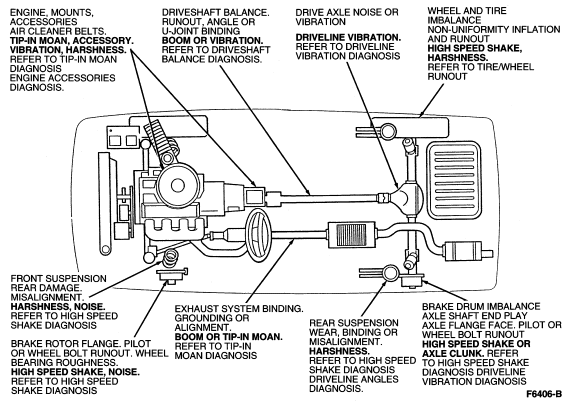
NVH Locator Index
Section 00-04: Noise, Vibration and Harshness | 1994 Mustang Workshop Manual |
How To Use This Diagnostic Procedure Section
Noise, vibration and harshness (NVH in engineering shorthand) is becoming more and more important as the vehicles are becoming more sensitive to these vibrations. This section is designed to give a working knowledge of the process of diagnosing noise and vibration situations. It is divided into several sections based on the description of the condition. If the condition occurs at high speed, for instance, the most likely place to start is under High Speed Shake. The Road Test Section will tell how to sort out the conditions into categories and how to tell a vibration from a shake. It will give a few hints on quick checks to make sure that a cause is either pinpointed or eliminated.
Become familiar with the terms. Use the Glossary section to find the descriptive name of conditions not encountered before. After naming it, proceed to the section identifying the condition, and locate the proper diagnosis section. Remember, just by beginning at a particular point, most other systems in the vehicle have been eliminated. When the proper section is identified, the job is partly done. Follow the steps within the section. Quick Checks are described within the step, while more involved tests and adjustments are found in Service and Adjustment. Always follow each step exactly and make notes along the way to recall important findings.
Road Test
NVH Diagnosis should always start with the road test. Noise, vibration
and harshness (NVH) usually occur in four areas: tires, engine accessories,
suspension and driveline. It is important, therefore, that a NVH concern be
isolated into its specific area as soon as possible. The easiest and quickest
way to do this is to perform a Road Test as outlined.
NVH Locator Index
A gear-driven unit, especially an automotive drive axle, will produce a certain amount of noise. Some noise is acceptable and may be audible at certain speeds or under various driving conditions, as on a newly paved blacktop road. The slight noise is in no way detrimental to the operation of the rear axle housing (4010) and must be considered normal. Camshaft belt whine is most often associated with new belts used on smaller engines. Whine will usually go away after belt break-in.
NOTE: It is important that the rear axle noise on vehicles equipped with either a manual or automatic overdrive transmission be evaluated in direct drive rather than overdrive.
The road test and customer interview (if available) provide information needed to identify the condition and give direction to the correct starting point for diagnosis.
Make a visual inspection as part of the preliminary diagnosis
routine, writing down anything that does not look right. Note tire pressures,
but do not adjust them yet. Note leaking fluids, loose nuts and/or bolts, or
bright spots where components may be rubbing against each other. Check the
luggage compartment for unusual loads. 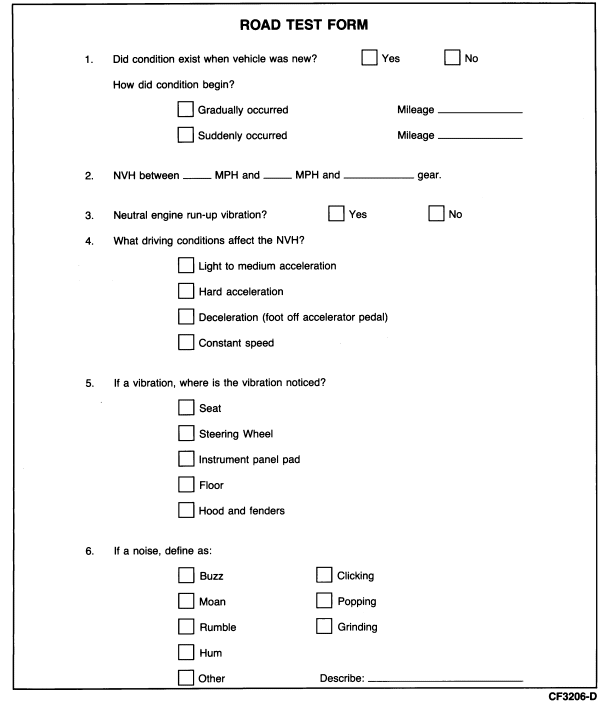
Road Test Quick Checks
Refer to Tip-In Moan Diagnosis charts.
Refer to Driveshaft Vibration Diagnosis.
Refer to High Speed Shake Diagnosis charts.
It will exist in all drive modes, but may vary somewhat in acceleration, deceleration, float, or coast modes. In some cases the driveline vibration is eliminated in the float mode.