Section 12-03B: Compressor and Clutch—10P15C | 1993 Mustang Workshop Manual |
MAJOR SERVICE OPERATIONS
Compressor—Out-of-Vehicle
Head Gasket and O-Ring Seal
Tools Required:
- Shaft Key Remover T81P-19623-NH
- Snap Ring Pliers T71P-19703-T
- Shaft Seal Seat Remover T87P-19623-BR
- Shaft Seal Replacer T87P-19623-C
- Shaft Seal Protector T71P-19703-H
- Rotunda Electronic Leak Detector 055-00015
Disassembly
The refrigerant system must be discharged and compressor removed from
vehicle to perform head gasket and O-ring replacement operation.
- Drain refrigerant oil from compressor through suction and discharge port
openings into a calibrated container. Record amount of oil removed from
compressor.
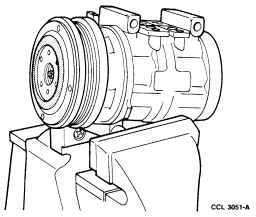
- Clamp compressor in a vise. Remove clutch hub, pulley and shims as outlined.
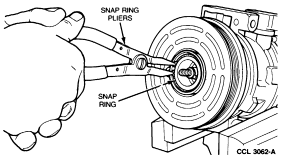
- Remove snap rings retaining clutch field coil to front of compressor. Then
pull field coil from front of compressor.
- Carefully remove felt and retainer from inside nose of compressor.
- Clean compressor front hub and front and rear head areas to remove any
accumulation of oil and dirt.
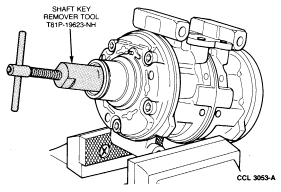
- Remove shaft key with Shaft Key Remover T81P-19623-NH.
Shaft Key—Removal
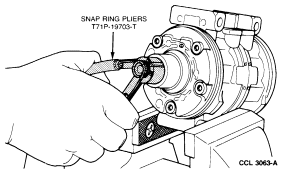
- Remove shaft seal seat retaining snap ring with Snap Ring Pliers
T71P-19703-T.
Seal Seat Retaining Snap Ring—Removal
- Clean inner bore of compressor nose to prevent dirt from entering
compressor when shaft seal seat is removed.
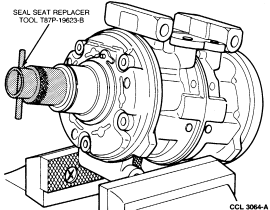
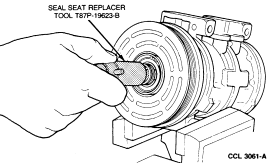
- Remove seal seat with Shaft Seal Seat Replacer T87P-19623-B.
Shaft Seal Seat—Removal
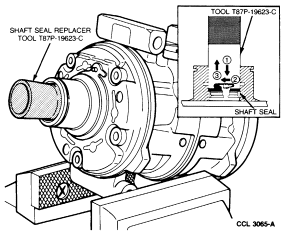
- Insert Shaft Seal Replacer T87P-19623-C into compressor nose opening and on
top of shaft seal. Rotate tool clockwise while pushing tool inward until tool
engages tangs of seal. Then pull shaft from compressor with tool.
Shaft Seal—Removal
- Hold front and rear heads in position on compressor. Remove five cylinder
bolts and washers retaining heads to compressor.
- Remove rear head, head gasket, rear valve plate, reed valves and dowel pins
from rear of compressor (refer to Compressor—Disassembled
illustration).
- Remove front head, head gasket, front valve plate, reed valves and dowel
pins from compressor.
Cleaning and Inspection
Clean all components in clean solvent and allow to dry. Do
not blow dry the valve plates or reed valves with compressed air. Repeat
the cleaning process using new cleaning solvent if necessary.
Inspect the cylinder bores for scratches, corrosion or other signs of
damage or wear. Replace compressor if any of these conditions exist.
Inspect valve plates for scratches, corrosion or signs of wear or other
damage. Replace the compressor if valve plate damage is found.
Inspect the reed valves for cracks, scratches, deformation and corrosion.
Replace the compressor if reed valve damage is found.
Assembly
- Install two dowel pins in front dowel pins holes of the cylinder assembly.
- Lubricate head O-ring and place it in groove on front of cylinder assembly.
- Lubricate front suction reed valve with clean refrigerant oil and place it
in position on front of cylinder assembly. Ensure the suction reed valve is
properly positioned on cylinder assembly as shown in the following illustration.
Suction Reed Valve Installed
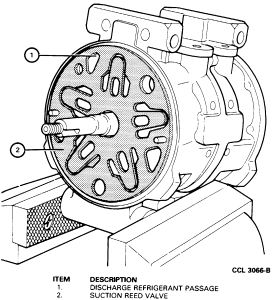
NOTE: The front and rear reed valves are identical and interchangeable.
- Lubricate front valve plate (marked with an "F") and place it in position
on cylinder assembly. The "F" mark must be showing when the valve plate is
properly installed.
Front Valve and Discharge Reed Valve Plate Installation
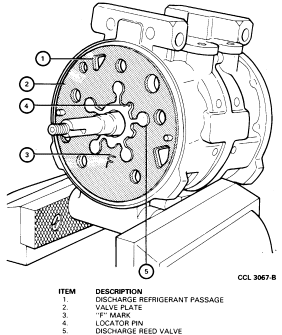
- Lubricate the discharge reed valve and place it in position on the front
valve plate. Be certain the two locator holes of the discharge reed valve are
positioned over the small pins pressed into the valve plate.
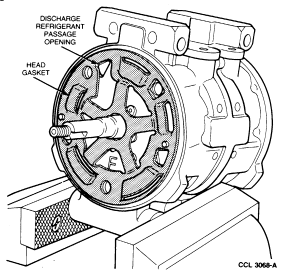
- Lubricate front head gasket and place it in position on the cylinder
assembly. The front and rear head gaskets are not interchangeable so it is
essential that the correct gasket is used. The raised portions of the gasket
must be positioned away from the cylinder assembly and the gas passage opening
must be positioned in line with the cylinder assembly discharge openings.
Head Gasket Installation
- Position front head to cylinder assembly aligning dowel pins with dowel pin
holes in front head.
- Install dowel pins in dowel pin holes at rear of cylinder assembly.
- Lubricate rear reed valve with clean refrigerant oil and place it in
position on the rear of the cylinder assembly. Ensure reed valve is properly
positioned on cylinder assembly for cylinder bolts to pass through reed valve
to rear head. The gas passage opening must be to the right of center and
aligned with the discharge openings.
- Lubricate rear valve plate (marked with an "R") and place it in position on
rear of cylinder assembly. The "R" mark must be showing when valve plate is
properly installed.
- Lubricate the discharge reed valve and place it in position on the rear
valve plate. Be certain the locator holes of the discharge reed valve are
positioned over the small pins pressed into the valve plate.
- Lubricate rear head gasket and place it in position on cylinder assembly
with raised portion of gasket away from cylinder assembly. Be certain gasket
does not block cylinder bolt passages and gas passage opening is positioned in
line with the cylinder assembly discharge openings.
- Lubricate rear head O-ring and place it in the groove on back of cylinder
assembly.
- Position rear head to cylinder assembly, aligning dowel pins with dowel pin
holes in rear head.
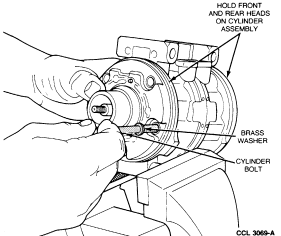
- Hold front and rear heads on the cylinder assembly. Install one cylinder
bolt until it is snug. This will prevent the heads from separating from the
cylinder assembly while the other cylinder bolts are installed.
Holding Cylinder Heads and Installing Cylinder Bolt
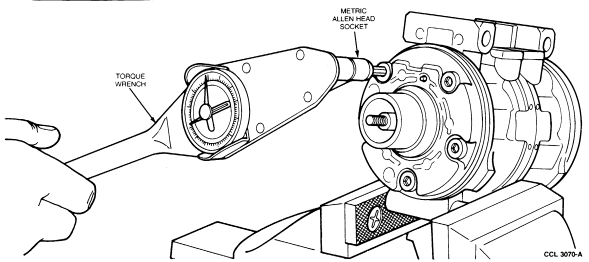
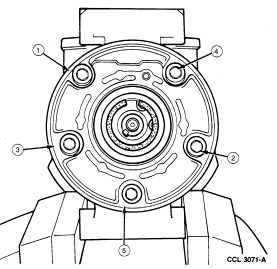
- Using a torque wrench, tighten five cylinder bolts in three steps: 16 Nm
(12 lb-ft), 20 Nm (15 lb-ft) and 25 Nm
(19 lb-ft) in a diagonal sequence as shown in the Cylinder
Bolt Tightening Sequence illustration.
Tightening Cylinder Bolts with Torque Wrench
Cylinder Bolt Tightening Sequence
- Lubricate new shaft seal with clean refrigerant oil and carefully attach
shaft seal to Shaft Seal Replacer T87P-19623-C.
 CAUTION: DO NOT TOUCH the sealing surface of the shaft seal or seal seat with
bare hands. To do so will damage the sealing surface.
CAUTION: DO NOT TOUCH the sealing surface of the shaft seal or seal seat with
bare hands. To do so will damage the sealing surface.
- Place Shaft Seal Protector T71P-19703-H over end of compressor shaft.
Shaft Seal Protector Installed
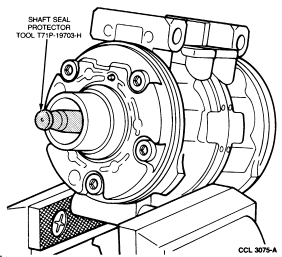
NOTE: Check the thin edge of the shaft seal protector for burrs or other
damage. Replace the tool if burrs are found as the burrs could damage the
internal sealing portion of the shaft seal assembly during installation.
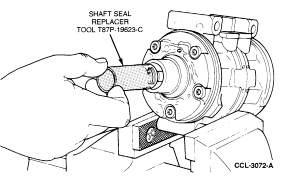
- Using Shaft Seal Replacer T92P-19623-BH insert shaft seal into compressor.
Rotate seal on compressor shaft while pushing inward until flats of shaft are
aligned with flats of shaft seal and seal is positioned against stops on shaft.
Remove tool by pushing inward and rotating one-eighth turn counterclockwise.
Shaft Seal—Installation
- Attach seal seat to Shaft Seal Seat Replacer T87P-19623-B and lubricate
seat with clean refrigerant oil. Then insert seal seat into compressor. Push
seal seat in against the seal.
Shaft Seal Seat—Installation
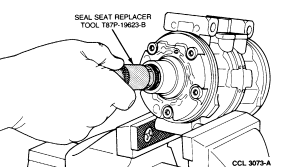
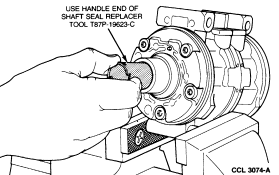
- Install seal seat retaining snap ring into nose of compressor and push snap
ring into the groove with handle end of Shaft Seal Replacer T87P-19623-C.
Pushing Seal Seat Snap Ring into Groove
- Install shaft key in shaft groove with rounded end inward.
- Pour new refrigerant oil into compressor. Refer to Step 1 of Disassembly
and Adding Refrigerant Oil, during compressor replacement.
- Rotate compressor shaft about 10 revolutions to distribute oil through
compressor and around shaft seal. Then leak test the shaft seal with a
flame-type leak detector as outlined under Compressor External Leak Test.
- Install a new felt strip and the original retainer into nose of compressor
(refer to Compressor—Disassembled illustration).
- Install clutch field coil with beveled side of snap ring out.
- Install clutch pulley with bevel of snap ring out. Then install shims and
clutch hub as outlined. Check clutch air gap and adjust as necessary.