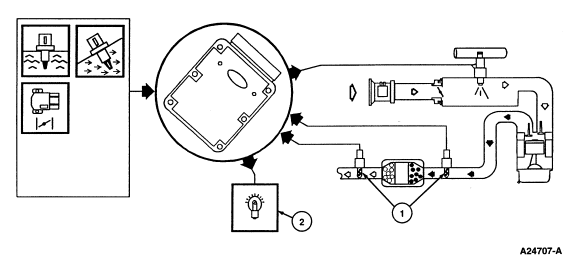
Figure 6: Catalyst Efficiency Monitor - Federal Test Procedure
1999 PCED On Board Diagnostics II |
SECTION 1: Description and Operation |
The Federal Test Procedure Catalyst Monitor monitors the catalyst system for deterioration and illuminates the MIL when tailpipe emissions exceed the appropriate HC emission thresholds. It is called the FTP catalyst monitor because it must complete during a standard emission test (the Federal Test Procedure). This monitor relies on the front and rear heated oxygen sensors (HO2S) to infer catalyst efficiency based upon oxygen storage capacity. Under normal closed loop fuel conditions, high efficiency catalysts have oxygen storage which makes the switching frequency of the rear HO2S quite slow compared with the frequency of the front HO2S. As catalyst efficiency deteriorates, its ability to store oxygen declines, and the rear HO2S begins to switch more rapidly, approaching the frequency of the front sensor. In general, as catalyst efficiency decreases, the switch ratio increases from a switch ratio of 0 for a low mileage catalyst to a switch ratio of 0.8 or 0.9 for a low-efficiency catalyst.
Many Low Emission California vehicles will monitor substantially less than the entire catalyst volume in order to meet the stringent catalyst monitoring malfunction thresholds. In many cases, only the front, light-off catalyst is monitored.