Section 01-20B: Restraints, Passive—Supplemental Air Bag System | 1994 Mustang Workshop Manual |
The air bag system is powered directly from the battery (10653) . The system can function with the ignition switch (11572) in any position, including OFF and LOCK. The system can also function when the driver seat is unoccupied. The electrical system performs three main functions:
The electrical system components include:
Sensors
The radiator primary crash sensor assembly is an electrical switch which reacts to impacts according to direction and force.
The air bag system is designed to operate in frontal or front-angled collisions. The driver side air bag module and passenger side air bag module should activate in a crash with severe frontal deceleration, more severe than hitting a parked car of similar size and weight head-on at about 45 km/h (28 mph).
Because the air bag system senses the severity of the crash rather than vehicle speed, some frontal collisions at speeds above 45 km/h (28 mph) may not be severe enough to require air bag inflation.
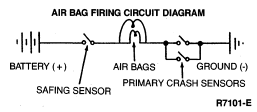
The sensors in the vehicle determine if air bag inflation is required in the following manner:
The primary sensors measure the crash severity while the safing sensor confirms the crash and is used to prevent inadvertent deployments possibly caused by a malfunction in the primary crash sensor circuits or crash sensors.