Section 03-00: Engine—Service | 1994 Mustang Workshop Manual |
SERVICE PROCEDURES
Cylinder Block
Servicing Sand Holes or Porous Engine Castings
Porosity or sand hole(s), which will cause oil seepage or leakage, can
occur with modern casting processes. A complete inspection of engine and
transmission should be made. If the leak is attributed to the porous condition
of the cylinder block (6010)
or sand hole(s), service can be made with an epoxy
sealer meeting specification M3D35-A(E) or equivalent. Do not
service cracks with this material. Service with this metallic plastic
must be confined to those cast iron engine component surfaces where the inner
wall surface is not exposed to engine coolant pressure or oil pressure. For
example:
- Cylinder block surfaces extending along the length of the cylinder block
, upward from the oil pan rail to the cylinder water
jacket, but not including machined areas.
- Lower rear face of the cylinder block
.
- Intake manifold casting. Service is not recommended to the
intake manifold exhaust crossover section, since temperatures can exceed the
recommended temperature limit of 260°C (500°
F).
- Engine front cover (6019) on engines using cast iron material.
- Cylinder head (6049) along the valve cover gasket surface.
The following procedure should be used to service porous areas or sand
holes in cast iron.
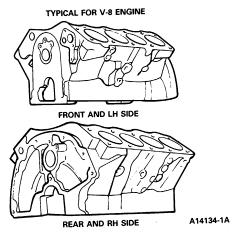
V-8 Engine Shown, V-6 Engine Similar
- Clean surface to be serviced by grinding or rotary filing to a clean,
bright metal surface. Chamfer or undercut hole or porosity to a greater depth
than rest of cleaned surface. Solid metal must surround hole. Openings larger
than 6.35mm (1/4 inch) should not be serviced using metallic plastic. Openings
in excess of 6.35mm (1/4 inch) can be drilled, tapped and plugged using common
tools. Clean service area thoroughly. Metallic plastic will not stick to a
dirty or oily surface.
- Mix metallic plastic base and hardener as directed on container. Stir
thoroughly until uniform.
- Apply service mixture with a suitable clean tool (putty knife, wood spoon,
etc.), forcing epoxy into hole or porosity.
- Allow service mixture to harden. This can be accomplished by two methods.
Heat cure with a 250-watt lamp placed 254mm (10 inches) from serviced surface,
or air-dry for 10-12 hours at temperatures above 10°C
(50°F).
- Sand or grind serviced area to blend with general contour of surrounding
surface.
- Paint the surface to match the rest of the cylinder block
.