Section 01-20A: Restraints, Active | 1993 Mustang Workshop Manual |
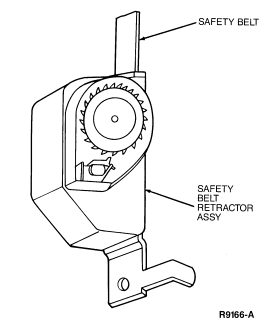
The lap/shoulder harness webbing is attached to a retractor which is located on the B-pillar post on 2-door and 3-door models. The lap/shoulder safety belt retractor for convertibles is located in the quarter panel. The retractor is designed to let the webbing freely move in or out, except during vehicle, hard braking, cornering, or impacts of approximately 8 km/h (5 mph) or more. Then, it is automatically locked by a mechanically actuated inertia sensor. The front seat retractors have a belt sensitive locking feature that will lock-up if the belt is pulled quickly.
The front shoulder safety belt is guided through the web guide which is mounted on the B-pillar or quarter trim panel and inside of the scuff plate/center pillar trim panel.
The webbing then passes through a guide above and behind the occupant's
shoulder which directs the webbing at the proper downward angle over the
occupant's shoulder and chest to the lap belt buckle. The belt has a slip
tongue (except convertible) that latches to lap belt buckle and continues
through slip tongue outboard to the sill below door opening. The slip tongue
then acts as a lap belt.
The buckle is routed along the side of the seat and is anchored to the floorpan.
Attaching the tongue and buckle secures the occupant with both lower and upper restraints. This attachment of the tongue and buckle can be accomplished by a single continuous movement.
Convertible
The lap/shoulder safety belt has a dual retractor system. A shoulder belt retractor is located in the quarter panel and a lap belt located at the base of quarter panel at rear of door opening. The safety belt webbing of the two retractors is joined to a common tongue.
The lap/shoulder safety belt retractor is designed to let the webbing freely move in or out, except during vehicle, hard braking, cornering, or impacts of approximately 8 km/h (5 mph) or more. Then it is automatically locked by a mechanically actuated inertia sensor.