Section 10-01: Fuel Tank, Filter and Electric Fuel Pump | 1993 Mustang Workshop Manual |
The fuel system uses a high-pressure in-tank mounted electric fuel pump. The vertical configuration tank is of sheet metal construction and incorporates an internal reservoir in which the fuel pump and sender assembly rest. This design increases satisfactory pump operation during extreme vehicle maneuvers and steep vehicle attitudes with low tank fill levels.
The high-pressure pumping unit is capable of supplying 60.0L (15.9 gal) of fuel per hour (2.3L engine) or 88.2L (23.3 gal) of fuel per hour at a working pressure of 269.0 kPa (39 psi). The pump has an internal relief valve to provide overpressure protection in the event the fuel flow becomes restricted (clogged filter, damaged fuel line, etc.). Overpressure is limited to 850 kPa (123 psi) and reduced fuel flow will result if pressure relief valve is activated.
The fuel pump is protected at its inlet by a nylon pick-up filter. It
filters dirt and contaminants which could plug or damage the internal pump
components while at the same time allowing passage of small quantities of water
which may accumulate within the fuel tank reservoir.
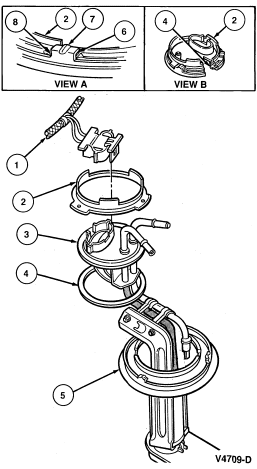
| Item | Part Number | Description |
|---|---|---|
| 1 | 9A340 | Wiring Assembly |
| 2 | 9C385 | Fuel Pump Locking Retainer Ring |
| 3 | 9350 | Fuel Pump |
| 4 | 9276 | Fuel Tank Sending Unit Gasket |
| 5 | 9002 | Fuel Tank |
| 6 | — | Stop |
| 7 | — | Tab |
| 8 | — | Detent |
The electrical system has a fuel pump control relay controlled by the powertrain control module (PCM) (12A650), which provides power to the fuel pump through an inertia switch, which is normally closed.
The electrical system provides power to the fuel pump through two relays: fuel pump and powertrain control module (PCM) power relays. On 2.3L vehicles, the power relays are located in the constant control relay module (CCRM) (12B577). The CCRM is serviced as a unit. The current path is dependent upon the operating condition(s).
When the ignition switch is in the OFF position, the contacts of both relays are open.
When the ignition switch is first turned to the ON position, the PCM power relay is energized, closing its contacts. Power is provided to both the fuel pump relay and to a timing device in the PCM. The fuel pump runs through the contacts of the fuel pump relay. If the ignition switch is not turned to the START position, the timing device in the PCM will open the ground Circuit 57 (after approximately one second). Opening the ground circuit de-energizes the fuel pump relay (opening its contacts), which in turn de-energizes the fuel pump. This circuitry provides for pre-pressurization of the fuel system.
When the ignition switch is turned to the START position the PCM operates the fuel pump relay to provide fuel while cranking.
After the engine starts and the ignition switch is returned to the ON position, power to the fuel pump is again supplied through the fuel pump relay. The PCM senses engine speed and shuts off the fuel pump by opening the ground circuit to the fuel pump relay when the engine stops, or is below 120 rpm.