Section 06-06: Brake System, Hydraulic | 1993 Mustang Workshop Manual |
ADJUSTMENTS
Brake Vacuum Booster Push Rod-To-Master Cylinder
The vacuum booster has an adjustable push rod (output rod, Bendix design
only) which is used to compensate for dimensional variations in an assembled
booster. The push rod length is adjusted after each booster power unit has been
assembled in production. A properly adjusted push rod that
remains within the booster after it was assembled in production should never
require a service adjustment.
A booster that is suspected of having an improper push rod length will
indicate either of the following:
- A push rod which is too long will prevent the master cylinder piston from
completely releasing hydraulic pressure and cause brakes to drag.
- A push rod which is too short will increase brake pedal travel and cause
a clunk or groaning noise from the booster.
If necessary, booster push rod length can be verified with a push rod
gauge using the following procedure:
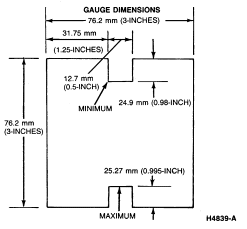
- Without disconnecting the brake tubes, disconnect the master cylinder and
set it away from the booster power unit. The master cylinder, must be supported
to prevent damaging the brake tubes.
- With the engine idling, gauge and adjust the push rod length. A force of
approximately 22 N (5 lb) applied to push rod with the gauge will ensure that
push rod is seated with power unit.
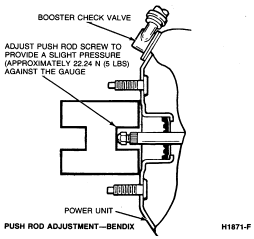
- Install the master cylinder on the power unit. Gradually alternate the
tightening of the retaining nuts to 21-29 Nm (16-21 lb-ft).
- With the engine idling and the master cylinder reservoir cover removed,
observe the fluid surface in the reservoirs when the brake pedal is applied
rapidly. Some fluid movement should occur in the forward
reservoir. If fluid surface movement did not occur, the push rod is adjusted
too long and the procedure must be repeated to prevent eventual brake
drag.