Section 06-02: Brakes, Rear Drum | 1993 Mustang Workshop Manual |
These vehicles are equipped with front disc brakes and rear drum brakes. The front and rear brakes are actuated by separate hydraulic systems, so if a leak occurs in either system, the remaining system is still operative.
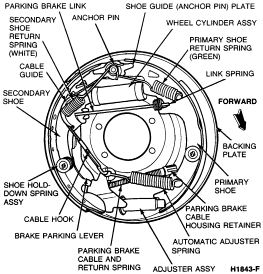
The rear drum brakes use internal, hydraulically actuated, expanding brake shoes that are applied against a rotating brake drum.
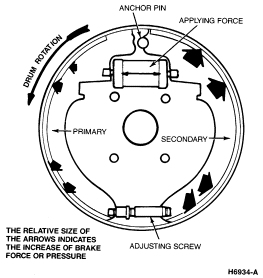
The most important fact contributing to the effectiveness of the braking
force supplied by the drum brake is the brake shoe pressure or force directed
against the drum. With the vehicle moving in either the forward or reverse
direction with the brakes on, the applied force of the brake shoe, pressing
against the brake drum, will increasingly multiply itself because the brake's
anchor pin acts as a brake shoe stop and prohibits the brake shoe from its
tendency to follow the movement of the rotating drum. The result is a wedging
action between the brake shoe and brake drum. The wedging action combined with
the applied brake force creates a self-multiplied brake force.
Another factor that contributes to the braking force supplied by the
brake drum is the servo-action which results when one brake shoe pushes against
the other. The brake force of the primary brake shoe is amplified by the force
or pressure transmitted from the primary shoe to the secondary shoe through an
adjuster screw, which acts as a connecting link between the two shoes. Forward
and reverse servo-action is also provided when the parking brake is applied.
The parking brake is mechanically actuated by a cable system that pulls on the
parking brake lever, causing the lever to pivot against the parking brake link
located between the shoes. This action expands the brake shoes, pressing them
toward the brake drum.