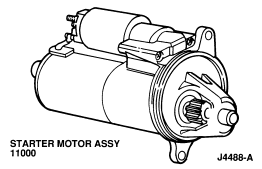
Typical Starter Shown
Section 03-06: Starting System | 1993 Mustang Workshop Manual |
The function of the starting system is to crank the engine at a speed fast enough to permit the engine to start. Heavy cables, connectors, and switches are used in the starting system because of the large current required by the starter while it is cranking the engine. The amount of resistance in the starting circuit must be kept to an absolute minimum to provide maximum current for starter operation. A discharged or damaged battery, loose or corroded connections, or partially broken cables will result in slower than normal cranking speeds, and may even prevent the starter from cranking the engine.
In case of starting system trouble, the operator may have discharged the battery before calling for assistance. A road service procedure is presented to aid the service technician in such cases of starting trouble. Be sure to follow diagnosis procedures in the Powertrain Control/Emissions Diagnosis Manual, in order to locate the cause of the starting difficulty. Road service is not a part of the diagnosis procedures.
The starting system includes the permanent magnet gear-reduction starter
motor with a solenoid-actuated drive, the battery, a remote control starter
switch (part of the ignition switch), the park/neutral position switch (PNP)
(automatic transmission), clutch pedal position switch (CPP) (manual
transmission), the starter relay and heavy circuit wiring.
Typical Starter Shown
Vehicles equipped with a manual transmission have a clutch pedal position switch (CPP) in the starter circuit that prevents operation of the starter unless the clutch pedal is depressed.
Vehicles equipped with an automatic transmission have a park/neutral position switch (PNP) in the starter control circuit, which prevents operation of the starter unless the selector lever is in the NEUTRAL or PARK position.