Section 03-00: Engine—Service | 1993 Mustang Workshop Manual |
After the block has been thoroughly cleaned, check it for cracks. Tiny cracks not visible to the naked eye may be detected by coating the suspected area with a mixture of 25 percent kerosene and 75 percent light engine oil. Wipe the part dry and immediately apply a coating of zinc oxide dissolved in wood alcohol. Do not use rubbing alcohol as a substitute. If cracks are present, the coating will become discolored at the damaged area. Replace the block if it is cracked.
Check all machined surfaces for burrs, nicks, scratches and scores. Remove minor imperfections with an oil stone.
Check the cylinder block for flatness of the cylinder head gasket surface following the procedure and specifications recommended for the cylinder head. The cylinder block can be machined to bring the cylinder head gasket surface within the flatness specifications listed in Section 03-01A (2.3L) or Section 03-01B (5.0L), but not to exceed 0.254mm (0.010 inch) stock removal from the original gasket surface.
Replace all plugs that show evidence of leakage. Inspect the cylinder walls for scoring, roughness or other signs of wear. Check the cylinder bore for out-of-round and taper. Measure the bore with an accurate bore gauge following the instructions of the manufacturer. Measure the diameter of each cylinder bore at the top, middle and bottom with the gauge placed at right angles and parallel to the centerline of the engine. Use only the measurements obtained at 90 degrees to the engine centerline when calculating the piston-to-cylinder bore clearance.
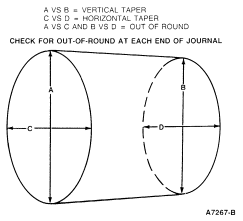
Inspect the main and connecting rod journals for cracks, scratches,
grooves, scores or rough finish. Inspect the crankshaft oil seal surface for
nicks, sharp edges, or burrs that might damage the oil seal during installation
or cause premature seal wear.