Section 00-04: Noise, Vibration and Harshness | 1993 Mustang Workshop Manual |
NVH DIAGNOSIS
Non-Axle Noise
There are a few other conditions that can sound just like axle noise and
have to be considered while performing road test diagnosis. The five most
common are transmission, exhaust, tires, roof racks and trim mouldings.
Therefore, ensure that none of the following conditions are the cause of
the noise before proceeding with an axle teardown and diagnosis.
- In certain conditions, the pitch of the exhaust may
sound very much like gear whines. At other times, it can be mistaken for a
wheel bearing rumble.
- Tires, especially snow tires, can have a high-pitched
tread whine or roar, similar to gear noise. Radial tires, to some degree, have
this characteristic. Also, any non-standard tire with an unusual tread
construction may emit a roar or whine-type noise.
- Trim and mouldings can also cause whistling or
whining noise.
- Clunk may be a metallic noise heard when the
automatic transmission is engaged in REVERSE or DRIVE, or it may occur when
throttle is applied or released. It is caused by backlash somewhere in the
driveline; it is felt or heard in the axle. Refer to Clunk Diagnosis.
- Bearing whine is a high-pitched sound similar to a
whistle. It is usually caused by malfunctioning pinion bearings, which are
operating at driveshaft speed. Roller wheel bearings may whine the same way if
they run completely dry. Bearing noise occurs at all driving
speeds; this distinguishes it from gear whine, which usually comes and
goes as speed changes.
- Bearing rumble sounds like marbles being tumbled.
This condition is usually caused by a malfunctioning wheel bearing. The lower
pitch is because the wheel bearing turns at only about one-third of driveshaft
speed.
- Bearing noise. Wheel bearing noise might be mistaken
for pinion bearing noise, so always look at the wheel bearings carefully before
tearing down the axle. As noted earlier, pinion bearings make a high-pitched,
whistling noise, usually at all speeds. However, if there is only one pinion
bearing that is malfunctioning, the noise may vary in different driving phases.
If a pinion bearing is suspected, refer to Group 05 for service procedures.
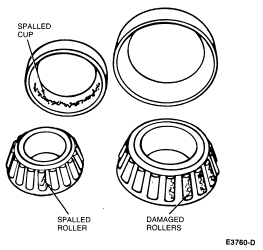
Bearings should not be replaced unless they are actually scored or damaged.
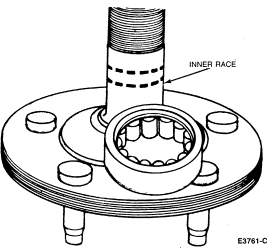
Rear wheel bearings are pressed into the axle housing, making
it more difficult to check them. However, the axle shaft is the inner race for
the bearing. So if the bearing is damaged, the roller surface on the shaft will
be damaged as well. The rollers run on about the center of the polished surface.